Introduction
Academic certificates are among the most valuable documents an individual possesses. They represent years of education, professional development, and academic achievement. Whether applying for higher education, employment, immigration, professional licensing, or international opportunities, educational documents often play a crucial role in the verification process.
As students and professionals increasingly move across borders for study and work, educational institutions, employers, and government authorities frequently require academic records in a language they can understand. When certificates are issued in another language, professional translation becomes essential.
Translation Services Singapore support students, professionals, educational institutions, and organizations by providing accurate translations of academic documents while preserving the original meaning, terminology, and formatting.
This guide explains everything you need to know about academic certificate translation in Singapore, including the types of educational documents commonly translated, why accurate translation matters, the translation process, common challenges, best practices, and frequently asked questions.
What Is Academic Certificate Translation?
Academic certificate translation is the process of translating educational documents from one language into another while maintaining accuracy, consistency, and the original meaning of the content.
Unlike general translation, academic translation requires a clear understanding of educational terminology, grading systems, institutional formats, and qualification titles.
A professionally translated academic document should accurately reflect:
- Course titles
- Degree names
- Academic grades
- Institution names
- Dates of attendance
- Qualification levels
- Academic achievements
Maintaining accuracy ensures that educational credentials can be evaluated correctly by receiving institutions or organizations.
Why Academic Certificate Translation Is Important
Educational documents are often used to verify qualifications, skills, and academic history.
Professional translation helps ensure that these records are easily understood and accepted during official evaluations.
Supports International Education
Students applying to colleges and universities abroad often need translated educational documents.
Helps Employment Verification
Employers may require translated academic certificates to verify qualifications.
Assists Immigration Procedures
Educational records may be included in visa and immigration applications.
Improves Communication
Translation removes language barriers between applicants and institutions.
Preserves Academic Integrity
Professional translation ensures that qualifications are represented accurately without changing their original meaning.
Common Academic Documents That Require Translation
Many different educational records may require translation depending on the purpose of submission.
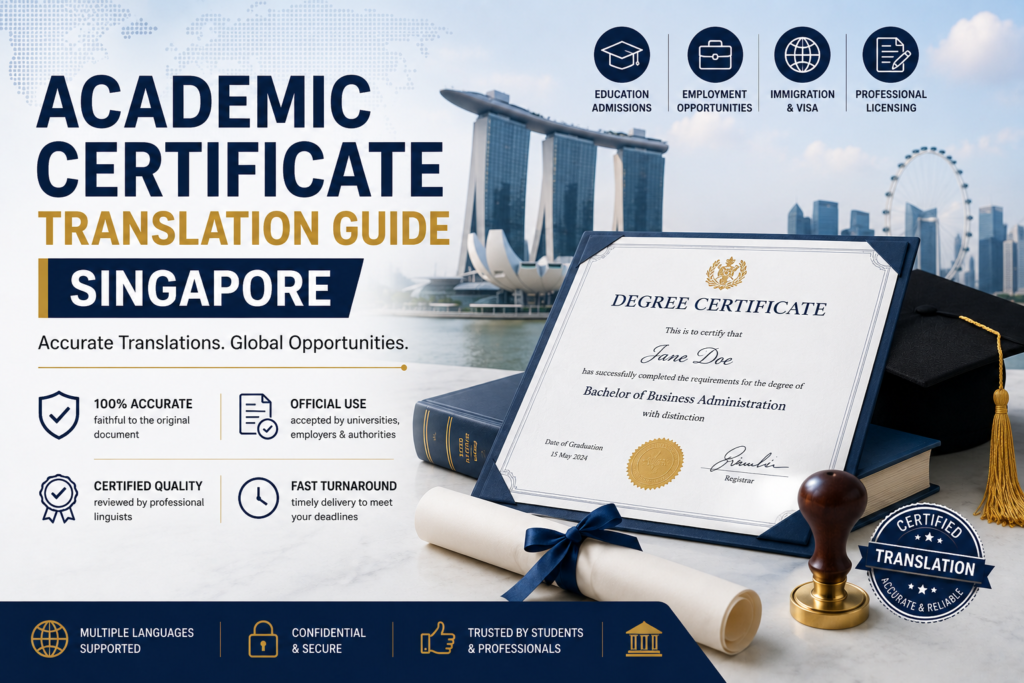
Degree Certificates
Degree certificates confirm the successful completion of undergraduate or postgraduate studies.
Typical information includes:
- Student name
- Degree title
- Institution name
- Graduation date
- Award details
Diploma Certificates
Diplomas issued by colleges, institutes, and vocational training centers often require translation.
Examples include:
- Technical diplomas
- Professional diplomas
- Vocational qualifications
Academic Transcripts
Transcripts provide detailed information about academic performance.
Typical contents include:
- Course names
- Subjects completed
- Grades
- Credits earned
- Semester information
School Leaving Certificates
These documents may be required for further education or immigration procedures.
Professional Certifications
Professional education often includes specialized certificates.
Examples include:
- Technical certifications
- Industry qualifications
- Professional development certificates
Training Certificates
Many organizations require translations of:
- Corporate training certificates
- Skill development programs
- Continuing education records
Situations Where Academic Certificate Translation Is Required
Educational document translation is commonly required in several situations.
University Admissions
Universities frequently request translated academic records during admissions.
Supporting documents may include:
- Degree certificates
- Academic transcripts
- School certificates
Employment Opportunities
Employers often review educational qualifications before making hiring decisions.
Common documents include:
- Degrees
- Diplomas
- Professional certificates
Professional Licensing
Some regulated professions require translated educational qualifications.
Examples include:
- Healthcare
- Engineering
- Education
- Finance
Immigration Applications
Educational qualifications may support immigration procedures.
Scholarship Applications
Scholarship providers often review academic achievements through translated records.
International Exchange Programs
Students participating in exchange programs frequently require translated academic documents.
Information Typically Found on Academic Certificates
Understanding the contents of academic certificates helps explain why accurate translation is essential.
Personal Information
- Student name
- Identification details
- Registration numbers
Educational Information
- Degree or diploma title
- Field of study
- Academic level
Institution Information
- University name
- College name
- Educational authority
Graduation Information
- Date of completion
- Date of graduation
- Award details
Academic Certificate Translation Process
Professional translation follows a structured workflow.
Step 1: Document Review
The document is examined to determine:
- Source language
- Target language
- Complexity
- Formatting requirements
Step 2: Terminology Assessment
Educational terminology is reviewed carefully.
Examples include:
- Degree names
- Academic titles
- Course descriptions
Step 3: Translation
The content is translated while preserving:
- Meaning
- Educational terminology
- Structure
- Formatting
Step 4: Quality Review
The translated document is reviewed for:
- Accuracy
- Grammar
- Consistency
- Formatting
Step 5: Final Preparation
The completed translation is prepared for official submission.
Common Challenges in Academic Certificate Translation
Although educational documents may appear straightforward, they present unique translation challenges.
Different Educational Systems
Countries use different qualification structures and grading systems.
Professional translation ensures these are presented clearly without changing their meaning.
Course Title Accuracy
Course names often contain technical terminology.
Examples include:
- Engineering programs
- Medical courses
- Scientific disciplines
Proper translation helps preserve academic value.
Grade Representation
Grading systems vary significantly between countries.
Translation should retain the original grading information without interpretation.
Institutional Terminology
Universities often use unique terminology.
Examples include:
- Faculties
- Departments
- Academic councils
Consistency is essential.
Formatting Preservation
Educational documents often include:
- Tables
- Seals
- Signatures
- Reference numbers
Maintaining the original layout improves readability.
Languages Frequently Requested in Singapore
Singapore’s multicultural environment creates demand for many language combinations.
Commonly requested languages include:
- English
- Chinese
- Malay
- Tamil
- Arabic
- Japanese
- Korean
- Indonesian
- Thai
- Vietnamese
- French
- German
- Spanish
These languages support international education and career opportunities.
Benefits of Professional Academic Translation
Accuracy
Educational achievements are presented correctly.
Consistency
Names, dates, and qualification details remain consistent across documents.
Better Readability
Institutions can easily review translated records.
International Recognition
Properly translated documents support global educational and employment opportunities.
Reduced Administrative Delays
Clear documentation minimizes requests for clarification.
Best Practices Before Translating Academic Certificates
Check Personal Information
Verify:
- Names
- Dates
- Institution names
Organize Documents
Prepare all supporting educational records before submission.
Maintain High-Quality Copies
Clear scans improve translation quality.
Preserve Original Documents
Keep original certificates in a safe location.
Start Early
Avoid waiting until application deadlines approach.
Industries That Frequently Require Academic Certificate Translation
Education Sector
Universities and colleges regularly review translated academic records.
Corporate Sector
Employers often verify educational qualifications during recruitment.
Government Agencies
Government departments may require translated educational documents for administrative procedures.
Healthcare Industry
Medical professionals frequently submit translated educational qualifications.
Engineering and Technical Fields
Technical professions often require educational verification.
Conclusion
Academic certificates are essential documents that support educational advancement, career opportunities, professional licensing, and international mobility. Accurate translation ensures that educational qualifications are clearly understood by universities, employers, government agencies, and professional organizations.
Whether translating a degree certificate, diploma, academic transcript, or professional qualification, maintaining accuracy, consistency, and the original meaning of the document is essential. Proper preparation and professional translation help streamline evaluations, reduce administrative delays, and support successful academic and professional applications.
As Singapore continues to serve as a global hub for education and employment, high-quality academic certificate translation remains an important service for students, graduates, and professionals pursuing opportunities across borders.