When submitting official documents in Singapore, accuracy is everything. Whether the documents are for immigration, employment, education, legal matters, or government applications, authorities often require an English translation if the original document is in another language.
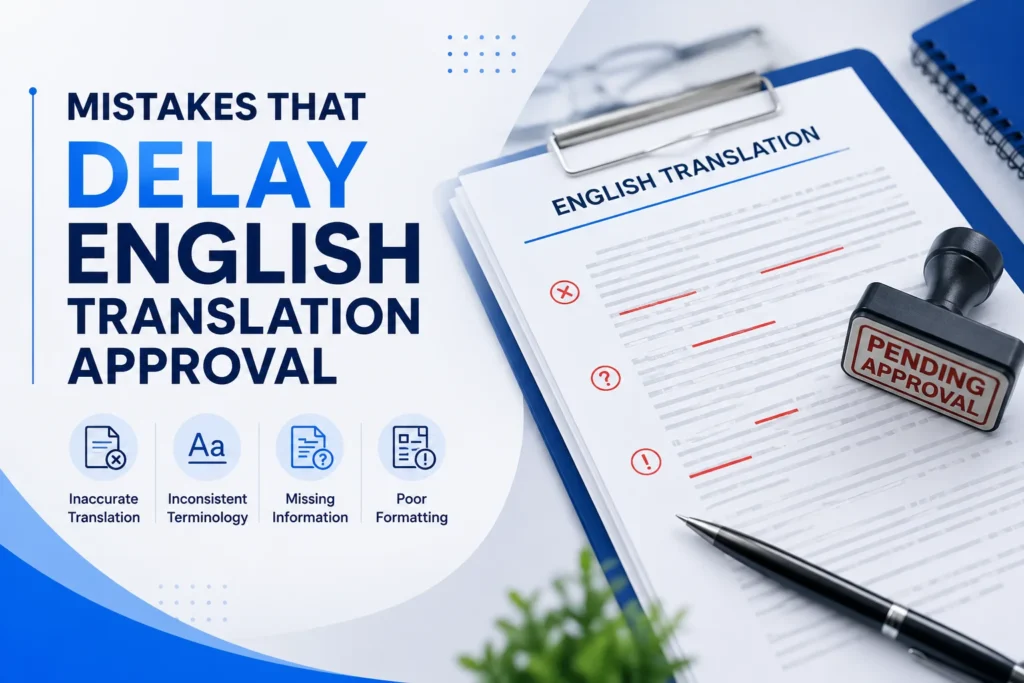
However, many applicants underestimate how strict document review standards can be. Even small errors in formatting, certification, or translation quality can lead to delays, requests for clarification, or outright rejection.
Understanding the common mistakes that delay English translation approval can help you prepare your documents correctly and avoid unnecessary stress, resubmissions, and processing delays.
Why English Translation Approval Matters in Singapore
Singapore’s official working language is English, which means most government authorities, courts, educational institutions, and employers require documents to be submitted in English for proper review.
Authorities such as:
- Immigration & Checkpoints Authority (ICA)
- Ministry of Manpower (MOM)
- Courts and legal institutions
- Universities and licensing bodies
carefully assess translated documents to verify:
- Identity
- Qualifications
- Legal status
- Employment records
- Family relationships
If the translation does not meet official standards, approval may be delayed.
1. Using Machine Translation Instead of Professional Translation
One of the biggest mistakes applicants make is relying on:
- Google Translate
- AI-generated translation tools
- Informal translators without professional experience
While machine translation tools are convenient, they often:
- Misinterpret official terminology
- Produce awkward sentence structures
- Translate names and legal phrases incorrectly
Authorities may reject documents if the translation appears inaccurate or unprofessional.
✅ Better Approach
Always use professional English translation services in Singapore, especially for official or government-related submissions.
2. Submitting Incomplete Translation
Some applicants translate only selected sections of a document, assuming the remaining details are unimportant.
This often causes delays because authorities usually expect:
- Full page-by-page translation
- Translation of stamps and seals
- Handwritten notes and annotations
- Signatures and official remarks
Missing even a small section can make the document appear incomplete.
✅ Better Approach
Ensure every part of the original document is translated completely.
3. Missing Certification Statement
For many official submissions, authorities require certified English translation.
A certified translation normally includes:
- Declaration of accuracy
- Translator or agency details
- Signature and date
- Official stamp or letterhead
Without certification, authorities may not consider the document valid for official use.
✅ Better Approach
Confirm whether certified translation is required before submission.
4. Incorrect Names, Dates, or Numbers
One of the most common reasons for delayed approval is inconsistency between documents.
Examples include:
- Different spelling of names
- Wrong birth dates
- Incorrect passport numbers
- Mismatched certificate numbers
Even a small typo can trigger clarification requests or re-submission.
✅ Better Approach
Double-check all personal details across every translated document before submission.
5. Poor Formatting That Doesn’t Match the Original
Authorities often compare translated documents directly with the originals.
Problems occur when:
- Tables are removed
- Headings are rearranged
- Layout changes completely
- Stamps or seals are omitted
Poor formatting can make verification difficult and slow down review.
✅ Better Approach
Use professional translators who maintain the structure and formatting of the original document.
6. Low-Quality Scans or Photos
Even a perfect translator cannot work effectively with poor-quality documents.
Common issues include:
- Blurry text
- Cropped pages
- Missing edges
- Unclear seals or stamps
- Shadows over text
This may lead to:
- Translation errors
- Clarification requests
- Processing delays
✅ Better Approach
Submit high-resolution scans or clear photos of all pages.
7. Waiting Until the Last Minute
Many applicants request translation only days—or even hours—before submission deadlines.
Rushed translations increase the risk of:
- Typos
- Formatting mistakes
- Missing pages
- Incomplete review
Urgent requests also leave little time for corrections if authorities request changes.
✅ Better Approach
Start translation early and allow buffer time before submission deadlines.
8. Using the Wrong Type of Translation
Some applicants confuse:
- Professional translation
- Certified translation
- Notarised translation
Using the wrong type may result in rejection or delays.
For example:
- ICA and MOM usually require certified translation
- Some overseas authorities may require notarisation
✅ Better Approach
Always confirm the exact translation requirement with the receiving authority.
9. Inconsistent Translation Across Multiple Documents
This is common in immigration or legal submissions involving multiple records.
Examples:
- Institution names translated differently
- Family relationships described inconsistently
- Different date formats across documents
Authorities may question document authenticity if terminology is inconsistent.
✅ Better Approach
Use one professional translation provider for all related documents.
10. Choosing Unqualified Translation Providers
Not all translation providers understand Singapore authority requirements.
An inexperienced provider may:
- Miss certification requirements
- Use incorrect terminology
- Deliver poor formatting
- Fail to meet official standards
This can lead to rejection and additional costs.
✅ Better Approach
Choose experienced translation providers familiar with:
- ICA requirements
- MOM submissions
- Legal and academic standards
- Government document formatting
How Delayed Translation Approval Affects Applications
Translation-related delays can impact:
- Work pass approvals
- PR or citizenship applications
- University admissions
- Court submissions
- Housing or marriage applications
A delay in translation often delays the entire process.
How to Ensure Faster English Translation Approval
To improve approval speed:
✅ Use Professional Certified Translation
Choose experienced providers familiar with Singapore regulations.
✅ Submit Complete Documents
Ensure all pages are included.
✅ Review Personal Details Carefully
Check names, dates, and numbers thoroughly.
✅ Use Clear Document Scans
Readable documents reduce processing issues.
✅ Start Early
Avoid last-minute urgent requests whenever possible.
Why Professional Translation Services Matter
Professional translation services provide:
- Accurate terminology
- Proper formatting
- Certified documentation
- Confidential handling
- Compliance with official standards
This significantly reduces the risk of rejection or delay.
Final Thoughts
Mistakes in English translation can create unnecessary delays in important applications and official processes. From incorrect formatting and missing certification to inconsistent details and rushed translations, even small issues can affect approval timelines.
Understanding the mistakes that delay English translation approval helps applicants prepare documents more effectively and avoid costly setbacks.
When accuracy, compliance, and timing matter, working with professional certified translation services in Singapore ensures your documents are translated correctly and accepted with confidence.